
A new online course on SALTO helps youth workers, facilitators and group leaders design international mobility projects that are truly safe and inclusive for Highly Vulnerable Young People. It is one of the main outputs of LADDER to Inclusion, an Erasmus+ KA2 partnership in which Associazione Joint is a partner.
International youth mobility can change a life. A youth exchange, a training course or a volunteering project with the European Solidarity Corps opens doors to learning, connection, autonomy and personal growth. For many young people it is a first taste of independence, intercultural encounter and active citizenship in a wider European community.
But mobility is not experienced the same way by everyone. For Highly Vulnerable Young People (HVYP), stepping into an unfamiliar international setting can also mean uncertainty, exposure and risk. Without proper preparation, support and professional awareness, mobility projects can end up reproducing exclusion, reinforcing power imbalances or leaving young people feeling unsafe and overwhelmed.
Who are Highly Vulnerable Young People?
In the LADDER project, HVYP are young people facing multiple, intersecting barriers, at least one of which is chronic, systemic or particularly hard to overcome. These can include socio-economic disadvantage, unstable family situations, trauma, discrimination, migration-related challenges, mental health difficulties, limited access to education or social isolation.
Compared with young people with fewer opportunities in general, HVYP often need:
- longer preparation processes;
- stronger relational support;
- clearer structures and boundaries;
- consistent accompaniment before, during and after mobility.
For them, taking part is not only a matter of access but of responsible support and safeguarding. Inclusion means adapting environments and practices so that participation becomes safe and meaningful, not merely possible.
Why safety and inclusion matter in mobility
Mobility is learning through encounter. Participants temporarily leave familiar places, social roles and support systems. That creates powerful learning opportunities, and it also increases vulnerability. International projects combine unfamiliar cultural norms, shared living spaces, intense group dynamics, distance from usual support networks and complex power relations between participants and facilitators.
For HVYP, these conditions can trigger anxiety, past trauma or feelings of exclusion if they are not well supported. Inclusion therefore goes beyond counting participants. It calls for intentional professional practice that brings together safeguarding, intercultural awareness, trauma sensitivity and shared responsibility within the facilitation team.
Inclusion is not only about participation. It is about safety. It is about dignity. It is about creating conditions in which young people do not have to hide parts of themselves to feel they belong.
What the course covers
The course follows the learning logic of the LADDER to Inclusion Handbook and explores the competences youth workers need to create safer mobility environments:
- teamwork and shared responsibility;
- intercultural diversity and inclusive facilitation;
- recognising violence and preventing harm;
- grooming awareness and grey zones;
- safeguarding and ethical practice;
- risk management and emergency preparedness;
- trauma-informed and solution-focused approaches;
- psychological first aid;
- self-care and the sustainability of youth work.
Through case studies, reflection exercises and practical tools, participants strengthen their ability to design safer and more inclusive projects, anticipate and prevent risks, respond responsibly to difficult situations, support young people facing multiple barriers, and keep professional boundaries while protecting their own wellbeing.
Who it is for
Youth workers, facilitators, group leaders, mentors and organisations that run or send young people on youth exchanges, training courses, European Solidarity Corps volunteering and other Erasmus+ youth activities.
About LADDER to Inclusion
LADDER to Inclusion is an Erasmus+ KA2 strategic partnership running from September 2024 to December 2026. It is coordinated by Élményakadémia (Academy of Experience) together with Associazione Joint (Milan, Italy), MARTA and Las Niñas del Tul. Its goal is to open Erasmus+ mobility to the most vulnerable young people and raise the quality of youth work. Besides the online course, the project produces a methodological handbook and infographic, a child and youth safeguarding policy template, a trainer’s manual, workshops and blended mobility training.
Our goal
International mobility should not just be available to Highly Vulnerable Young People: it should be truly safe, supportive and transformative for them. When safety, inclusion and professional responsibility meet, mobility becomes more than a trip. It becomes a turning point.
Start the course on SALTO: CLICK THIS LINK
- click on JOIN THE COURSE
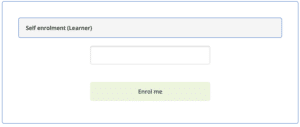
- Scroll down and insert the password English-1 then click “Enrol me”
- You’re ready to start!
For technical help with the course, write to [email protected].