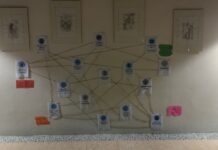

From 12 to 19 May 2026, Salinas, Spain, hosted an Erasmus+ training course for those who lead groups of young people within Erasmus+ projects. Called “Youth Mobility Leaders,” the course was specifically designed for group leaders accompanying inclusive youth exchanges involving participants under the age of 18.
The initiative is part of Ye Too Ponese’s Erasmus+ Accreditation strategy and was created to address a very practical need: leading groups of minors during an international mobility project requires much more than enthusiasm—it requires solid skills and preparation.
Inclusion, Safety, and Practical Tools for Group Leaders
The course is built on the idea that inclusion cannot be improvised. When a youth exchange involves participants with fewer opportunities or young people in particularly vulnerable situations, the quality of the experience largely depends on how well group leaders are prepared to manage every stage of the project:
preparation,
implementation of the exchange, and
follow-up activities.
For this reason, the training focuses on quality standards and practical methods, moving beyond purely theoretical approaches in favour of tools that participants can immediately apply in real-life settings.
The learning objectives cover several key aspects of the group leader’s role. Participants first explored the responsibilities and duties of a group leader throughout the different phases of an Erasmus+ youth mobility project. The course then moved on to a broader reflection on inclusion and diversity, with a particular focus on strategies for supporting participants with fewer opportunities, including those facing more significant vulnerabilities.
A substantial part of the program was dedicated to practical skills and methodologies for creating safe learning environments, including the fundamentals of risk and crisis management—an often underestimated yet essential aspect of working with minors away from home. Finally, the training also encouraged peer learning, giving participants the opportunity to exchange experiences, learn from one another, and build a network of more confident and better-equipped youth leaders.
Vincenzo’s Testimonial
 During this training course in Salinas, I had the opportunity to deeply explore the developmental stage of adolescence, the specific needs of young people, and the challenges they face today, understanding how to best support them during international projects. Having already had some experience as a Group Leader, this journey held double the value for me: it wasn’t just about learning new techniques, but about delving into the “why” behind every single practice put into place. While I used to apply certain tools intuitively, I now deeply understand their pedagogical and methodological purpose.
The most interesting part was the very structure of the program: being entirely based on non-formal education, it was a mirror simulation of a youth exchange itself. This allowed us to naturally and unconsciously grasp group dynamics, the relationships between participants, and the vital importance of core activities like initial team building or reflection groups at the end of each day.
The daily program was a perfect balance of theory and practice. We had sessions dedicated to active listening, learning how to tune into the needs of young people, especially those with fewer opportunities. Through group work, we tested ourselves with real case studies, facing intense simulations of risk management and crisis management to understand how to respond to different participant behaviors or emergencies. We also reflected on the key qualities of a leader and how to structure a solid safeguarding protocol for minors.
In this context, the role of the Group Leader throughout all phases of a project—from pre-departure to follow-up—was finally clarified, bringing our boundaries of action into sharp focus. We delved into the concepts of comfort and discomfort zones, focusing on when it is time to encourage young people to push themselves further and when, instead, it is crucial to stop and embrace their vulnerability.
The added value of the experience was undoubtedly the contribution of the facilitators from Ye Too Ponese and Associazione Joint. With an empathetic, fluid, and never academic approach, they created a safe and stimulating space, valuing everyone’s background and carefully guiding us through the debriefing moments. Finally, we also had the chance to step out of our own comfort zones by trying surfing in the Cantabrian Sea for the first time: the perfect mix of personal growth, team spirit, and new discoveries. I am heading home with a completely new awareness, concrete tools, and so much energy for the next exchanges!
Conclusion
“Youth Mobility Leaders” is part of a broader effort to professionalize the role of the Group Leader within Erasmus+ youth exchanges. It recognises that working with participants under the age of 18 and with young people in vulnerable situations requires specific competencies and cannot be left to improvisation.
This training course represents an important investment in the quality of Erasmus+ projects and, above all, in the safety, well-being, and meaningful participation of the young people involved.
The training course was hosted by Ye Too Ponese, an association founded in Asturias in 2004 that promotes youth participation and active citizenship, inspired by the educational philosophy of Paulo Freire and by the collective construction of a positive vision of society. The Italian partnership and project management were coordinated by Associazione Joint.